Fish and seafood are among the easiest foods to use when you want more high-quality protein without making meals overly heavy.
Salmon, tuna, sardines, cod, tilapia, and shrimp all provide substantial amounts of complete protein, but their nutritional profiles are not identical. Salmon and sardines are especially valuable for omega-3 fats. Tuna and cod are exceptionally lean. Tilapia provides a mild, versatile protein source, while shrimp delivers a surprising amount of protein for relatively few calories.
So which option is best?
The answer depends on what you want from your meal. Someone trying to maximize protein while keeping calories low may choose differently from someone trying to increase omega-3 intake.
This guide covers salmon nutrition, protein in salmon, tuna nutrition, salmon vs tuna, high-protein fish, low-calorie fish, sardines, cod, tilapia, shrimp, and the healthiest ways to include seafood in your diet.
Fish Nutrition at a Glance
The table below gives approximate values for commonly eaten cooked fish and seafood. Exact nutrition varies by species, cooking method, portion size, added oil, and whether the product is fresh or canned.
| Fish or Seafood | Calories per 100 g | Protein per 100 g | Main Nutrition Advantage |
|---|---|---|---|
| Salmon | ~200–210 | ~22 g | Omega-3 fats, vitamin D, B12 |
| Tuna | ~115–135 | ~25–29 g | Very lean, high protein |
| Sardines | ~200–210 | ~24–25 g | Omega-3, B12, calcium when bones are eaten |
| Cod | ~90–105 | ~20–23 g | Low calorie, very lean |
| Tilapia | ~125–130 | ~26 g | High protein, mild flavor |
| Shrimp | ~95–105 | ~23–24 g | Very high protein for calories |
Quick Answer
If your priority is omega-3 fats, salmon and sardines are among the strongest choices.
If your priority is maximum protein for fewer calories, tuna, cod, shrimp, and tilapia are especially useful.
Salmon Nutrition Facts
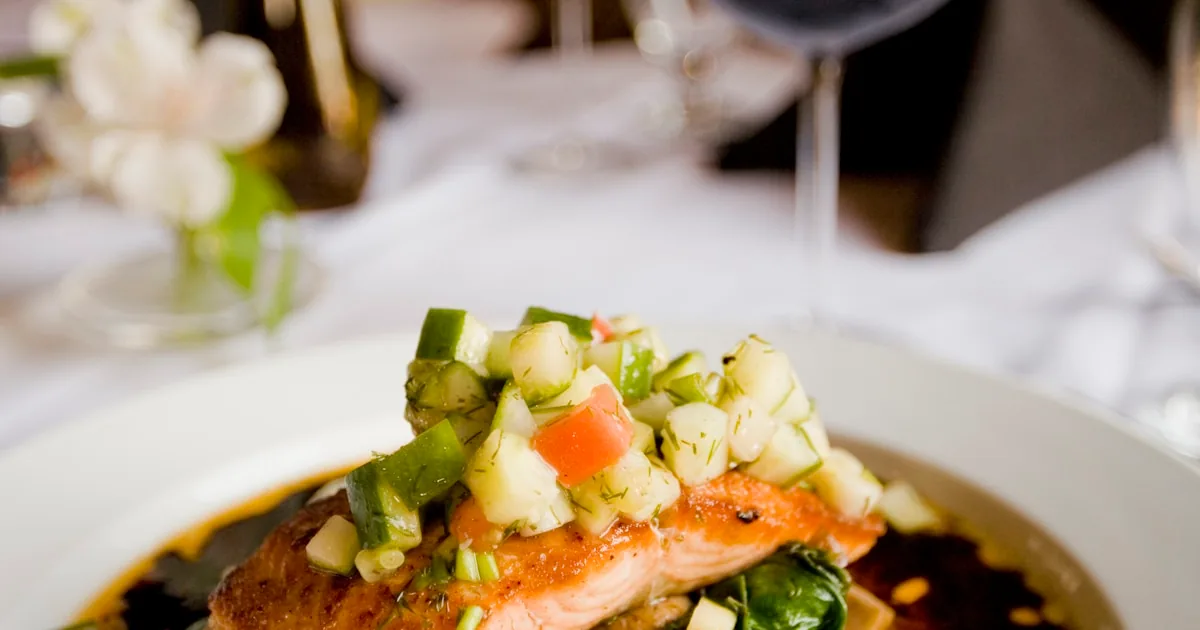
Salmon is one of the most nutritionally well-rounded fish.
A typical 100-gram portion of cooked salmon provides roughly 200 calories and 22 grams of complete protein, although values differ between wild and farmed salmon and among species.
Salmon also provides meaningful amounts of vitamin B12, selenium, several B vitamins, and vitamin D.
Its biggest nutritional advantage, however, is its omega-3 fat content.
Salmon Nutrition per 100 Grams
| Nutrient | Approximate Amount |
|---|---|
| Calories | 200–210 kcal |
| Protein | 22 g |
| Total Fat | 12–13 g |
| Carbohydrates | 0 g |
| Fiber | 0 g |
| Sugar | 0 g |
Salmon contains more calories than very lean fish such as cod because salmon naturally contains more fat.
That extra fat is not necessarily a disadvantage. A significant portion consists of unsaturated fatty acids, including long-chain omega-3 fats.
How Much Protein Is in Salmon?
A 100-gram cooked serving of salmon typically contains approximately 22 grams of protein.
Approximate amounts are:
| Cooked Salmon Portion | Approximate Protein |
|---|---|
| 3 oz / 85 g | 18–19 g |
| 100 g | ~22 g |
| 150 g | ~33 g |
| 6 oz / 170 g | ~37 g |
| 200 g | ~44 g |
Salmon is also a complete protein, which means it provides all nine essential amino acids.
That makes it suitable for supporting daily protein requirements, muscle maintenance, recovery, and general nutrition.
Health Benefits of Salmon
Salmon offers benefits beyond simply providing protein.
Rich in Omega-3 Fatty Acids
Salmon is particularly well known for EPA and DHA, two long-chain omega-3 fatty acids found mainly in fatty seafood.
These fats are involved in cardiovascular, neurological, and inflammatory processes in the body.
This does not mean salmon prevents every heart or brain problem. It simply means fatty fish can make a meaningful contribution to omega-3 intake within a balanced diet.
Provides High-Quality Protein
Salmon provides all essential amino acids and delivers substantial protein in a reasonable serving.
That can make it useful for active individuals, older adults, and anyone trying to build meals around high-quality protein.
Provides Vitamin B12
Vitamin B12 is important for normal red blood cell formation, DNA-related processes, and nervous-system function.
Fish and seafood are among the major natural dietary sources of this vitamin.
Contains Selenium
Salmon also provides selenium, an essential trace mineral involved in antioxidant systems and thyroid hormone metabolism.
Can Fit Into Weight-Management Diets
Salmon is more calorie-dense than cod or tuna, but that does not make it unsuitable for weight management.
Its protein and fat can help create satisfying meals.
The key is portion size and preparation.
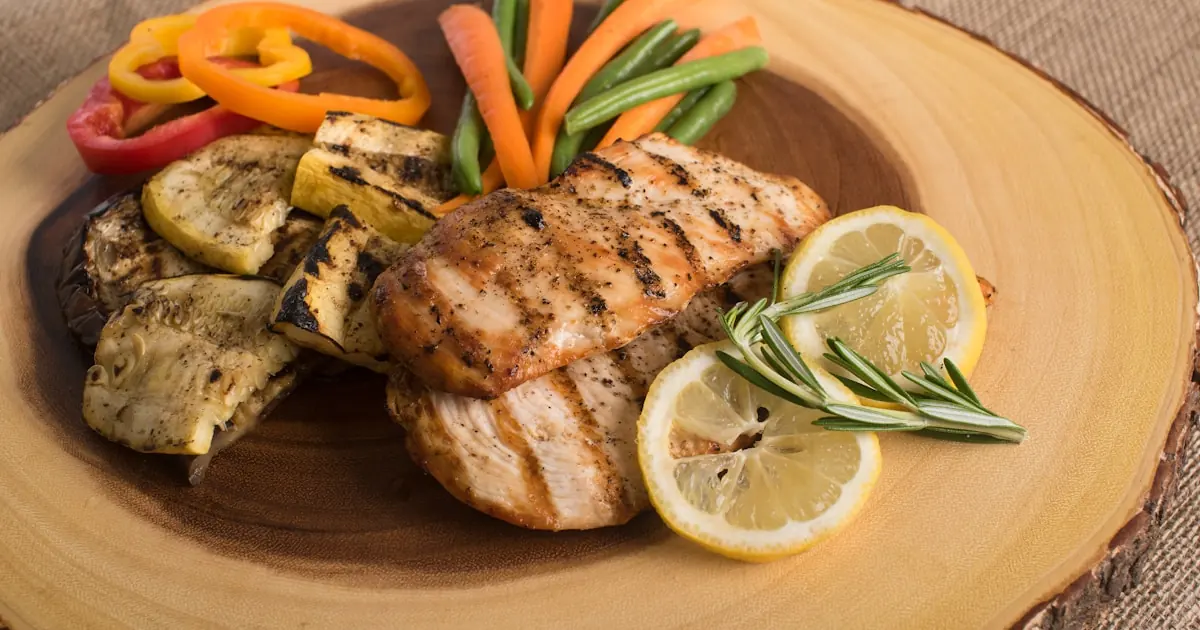
Grilled salmon with vegetables is very different nutritionally from salmon covered in butter, creamy sauce, or sugary glaze.
Is Salmon Good for Muscle Building?
Yes.
Salmon provides complete protein and can contribute to the total protein needed for muscle maintenance and growth.
It also provides dietary fat and other nutrients, which makes it a more energy-dense option than very lean fish.
For people trying to gain muscle and who need more total calories, this can actually be useful.
However, muscle growth still depends on resistance training, adequate total protein, sufficient calories, recovery, and sleep.
Tuna Nutrition: Calories, Protein and Benefits
Tuna is one of the most protein-dense seafood choices.
A 100-gram serving often provides around 25 to 29 grams of protein while containing considerably less fat than salmon.
This makes tuna particularly popular in calorie-controlled and high-protein diets.
Tuna Nutrition at a Glance
Depending on the variety and whether it is canned in water or oil, a 100-gram serving generally provides approximately:
| Nutrient | Approximate Amount |
|---|---|
| Calories | 115–135 kcal |
| Protein | 25–29 g |
| Fat | 1–3 g |
| Carbohydrates | 0 g |
Tuna packed in oil may contain more calories because some oil remains after draining.
Tuna packed in water is usually the leaner option.
Health Benefits of Tuna
Tuna provides a large amount of high-quality protein, vitamin B12, selenium, niacin, and other nutrients.
Its biggest practical advantage is the combination of high protein and relatively few calories.
For example, someone trying to build a 30-gram-protein lunch can reach that target relatively easily with tuna.
It is also convenient because canned tuna requires almost no preparation.
What About Mercury in Tuna?
Mercury is an important consideration because different tuna species can contain very different amounts.
As a general rule, canned light tuna tends to contain less mercury than albacore or white tuna, while large predatory species such as bigeye tuna can contain more.
Pregnant people, those who may become pregnant, breastfeeding individuals, and young children should follow current seafood-consumption guidance carefully.
For everyone else, variety is still sensible. You do not need to make tuna your only seafood source.
Rotating it with salmon, sardines, cod, shrimp, and other lower-mercury options can provide a broader range of nutrients.
Salmon vs Tuna: Which Is Healthier?
Neither is universally healthier.
They simply have different nutritional strengths.
| Feature | Salmon | Tuna |
|---|---|---|
| Protein | High | Very high |
| Calories | Higher | Lower |
| Total fat | Higher | Very low |
| Omega-3 | Typically much higher | Present but generally lower |
| Vitamin D | Often higher | Usually lower |
| Protein per calorie | Good | Excellent |
| Best for | Omega-3 and balanced nutrition | Lean high-protein meals |
Salmon May Be Better If You Want
Salmon may have an advantage when your priorities include omega-3 intake, vitamin D, a richer source of healthy fats, or a more calorie-dense protein for active lifestyles.
Tuna May Be Better If You Want
Tuna may have the advantage if your priorities include very high protein, low calories, low fat, convenient meal preparation, or easy calorie control.
So Which Should You Choose?
For most people, the best answer is both.
You do not have to choose salmon forever or tuna forever.
Eating a variety of seafood gives you different combinations of fats, vitamins, minerals, and protein.
Best High-Protein Fish to Eat
Many fish provide around 20 grams or more of protein per 100 grams.
Some of the strongest everyday options include tuna, tilapia, salmon, cod, sardines, halibut, trout, and various white fish.
Shrimp is technically shellfish rather than fish, but it also deserves a place in high-protein seafood meals because of its impressive protein-to-calorie ratio.
If you're choosing purely for protein concentration, tuna and tilapia are especially strong.
If you want protein plus omega-3 fats, salmon and sardines are often better choices.
Best Low-Calorie High-Protein Fish
Very lean seafood can make it easier to increase protein without adding many calories.
| Seafood | Approx. Calories | Approx. Protein |
|---|---|---|
| Cod, 100 g | ~90–105 | 20–23 g |
| Shrimp, 100 g | ~95–105 | 23–24 g |
| Tuna in water, 100 g | ~115–130 | 25–29 g |
| Tilapia, 100 g | ~125–130 | ~26 g |
These foods are useful if you are trying to increase protein while keeping meals relatively light.
But the cooking method matters.
Cod has very few calories on its own.
Battered cod deep-fried and served with fries does not.
Sardines Nutrition and Health Benefits
Sardines are small oily fish that offer an unusually dense combination of nutrients.
A 100-gram serving of canned sardines typically provides around 200 calories and 24 to 25 grams of protein.
They also provide omega-3 fats, vitamin B12, selenium, and vitamin D.
When sardines are eaten with their soft edible bones, they can also provide a significant amount of calcium.
Why Sardines Deserve More Attention
Sardines are often overlooked because of their strong flavor, but nutritionally they are impressive.
They provide protein and omega-3 fats in the same food, require no cooking when canned, and are small fish that generally accumulate less mercury than large predatory fish.
They also work well with crackers, salads, toast, pasta, rice, or vegetables.
Cod Nutrition: Calories, Protein and Benefits
Cod is almost the opposite of salmon nutritionally.
Salmon is relatively fatty.
Cod is extremely lean.
A 100-gram serving of cooked cod generally provides approximately 90 to 105 calories and around 20 to 23 grams of protein.
That makes cod one of the most protein-efficient fish choices.
Why Cod Can Be a Good Choice
Cod works particularly well for people who want:
a mild fish, substantial protein, very little fat, low calorie density, and a versatile ingredient.
Because cod is so lean, how you cook it becomes particularly important.
Baking, steaming, poaching, or grilling keeps it light.
Battering and deep-frying can dramatically increase calories.
Tilapia Nutrition Facts
Tilapia is another lean, high-protein fish.
A typical 100-gram cooked serving provides roughly 125 to 130 calories and about 26 grams of protein.
That gives tilapia an excellent protein-to-calorie ratio.
Is Tilapia Healthy?
Tilapia can absolutely fit into a healthy diet.
It provides complete protein, selenium, vitamin B12, phosphorus, and other nutrients.
However, it contains much less omega-3 fat than oily fish such as salmon or sardines.
That means tilapia does not need to be considered “bad”; it simply serves a different nutritional role.
A practical approach is to rotate lean fish such as tilapia with fatty fish such as salmon.
Shrimp Nutrition: Protein, Calories and Health Benefits
Shrimp is technically shellfish rather than fish, but nutritionally it fits naturally into this discussion.
A 100-gram serving of cooked shrimp provides roughly 100 calories and 23 to 24 grams of protein.
That makes shrimp one of the most protein-dense lower-calorie seafood options.
Shrimp Nutrition at a Glance
| Nutrient | Approximate Amount per 100 g |
|---|---|
| Calories | ~100 |
| Protein | 23–24 g |
| Fat | ~1–2 g |
| Carbohydrates | Very little |
Shrimp also provides selenium, vitamin B12, iodine, and other nutrients.
What About Cholesterol in Shrimp?
Shrimp contains a relatively substantial amount of dietary cholesterol.
However, dietary cholesterol should not be considered in isolation.
For most people, overall eating patterns, saturated fat intake, fiber intake, genetics, and individual blood-lipid responses matter as well.
People with significant cholesterol problems or cardiovascular disease should follow personalized medical or dietary advice.
Salmon vs Sardines
Both are oily fish and good sources of omega-3 fats.
Salmon is easier for many people to use as a main meal and generally has a milder flavor.
Sardines tend to be more affordable, portable, and especially rich in calcium when their edible bones are consumed.
Neither needs to replace the other.
Cod vs Tilapia
Both are lean white fish and excellent protein sources.
Tilapia generally provides slightly more protein per 100 grams, while cod is often somewhat lower in calories.
The nutritional differences are not large enough that most healthy people need to obsess over which one is “best.”
Choose based on taste, price, availability, sustainability, and how you plan to cook it.
Fish for Weight Loss: Which Is Best?
Fish can be very useful in weight-management diets because many varieties provide substantial protein for relatively few calories.
The leanest options include cod, tuna, tilapia, and many other white fish.
Shrimp is also extremely lean.
Salmon and sardines contain more calories because they contain more fat, but they also provide substantially more omega-3 fats.
So higher calories do not automatically mean less healthy.
If you are managing weight, the larger issue is often preparation.
A 100-calorie piece of lean fish can become a much higher-calorie meal after breading, frying, butter, creamy sauce, and large side portions are added.
Fish for Muscle Gain: Which Is Best?
There is no single best fish for gaining muscle.
Most fish provide complete, high-quality protein.
Lean fish such as tuna, cod, and tilapia make it easy to add protein without much fat.
Salmon and sardines provide protein along with additional calories and omega-3 fats.
For someone actively trying to gain weight and muscle, salmon may be especially convenient because it provides more energy per serving.
For someone who needs a lot of protein while tightly controlling calories, tuna or cod may be easier to fit into the diet.
Best Ways to Cook Fish Without Adding Too Many Calories
Fish does not need complicated preparation.
Baking, grilling, steaming, poaching, and air frying with a small amount of oil all work well.
Herbs, lemon, lime, garlic, black pepper, paprika, chili, dill, parsley, ginger, and other seasonings can provide plenty of flavor without heavily increasing calories.
Deep frying, heavy breading, creamy sauces, and large amounts of butter or oil can substantially change the nutritional profile of an otherwise lean piece of seafood.
How Often Should You Eat Fish?
A common evidence-based recommendation for healthy adults is to include seafood roughly twice per week, especially varieties rich in omega-3 fats.
However, the ideal amount can vary.
Pregnant people and young children need to pay particular attention to fish species because of mercury exposure.
People with seafood allergies, certain medical conditions, or individual dietary restrictions should also follow appropriate professional guidance.
Frequently Asked Questions
The Bottom Line
Fish and seafood make it easy to add complete, high-quality protein to your diet.
Salmon provides roughly 22 grams of protein per 100 grams and stands out for its omega-3 fat content.
Tuna typically provides around 25 to 29 grams of protein while remaining very lean.
Sardines combine protein with omega-3 fats, vitamin B12, and calcium when the bones are eaten.
Cod is one of the leanest choices, providing roughly 20 to 23 grams of protein for around 100 calories.
Tilapia provides about 26 grams of protein per 100 grams and works well as a mild, lean fish.
Shrimp offers around 23 to 24 grams of protein for roughly 100 calories, making it one of the most protein-efficient seafood choices.
Rather than searching for one perfect fish, a better strategy is variety.
Include fatty fish such as salmon or sardines for omega-3 fats, lean options such as cod or tilapia for lighter meals, and convenient choices such as tuna or shrimp when you want a fast source of protein.
And remember that cooking method matters. A grilled, baked, poached, or lightly air-fried piece of fish has a very different nutritional profile from the same seafood after deep frying, heavy breading, butter, or creamy sauces are added.