Fruit Nutrition Facts: Calories, Carbs, Sugar, Fiber & Health Benefits of 15 Popular Fruits
Secondary Keywords: banana nutrition facts, apple nutrition, avocado nutrition, orange nutrition facts, mango nutrition, strawberry nutrition facts, blueberry nutrition, watermelon nutrition, pineapple nutrition, grapes nutrition facts, kiwi nutrition, pomegranate nutrition, dates nutrition, papaya nutrition, guava nutrition, calories in fruit, fruit carbs, fruit sugar, high fiber fruits
Fruit Nutrition Facts: Calories, Carbs, Sugar, Fiber & Health Benefits of 15 Popular Fruits
Fruit is naturally sweet, convenient, and packed with nutrients, but not all fruits have the same nutritional profile.
A banana contains considerably more carbohydrates than strawberries. Avocado is technically a fruit, yet most of its calories come from healthy fats rather than sugar. Dates are much more calorie-dense than watermelon, while guava contains far more vitamin C than many people realize.
That does not make one fruit “good” and another “bad.”
Different fruits simply offer different combinations of carbohydrates, natural sugars, fiber, vitamins, minerals, water and plant compounds.
The best approach is usually variety.
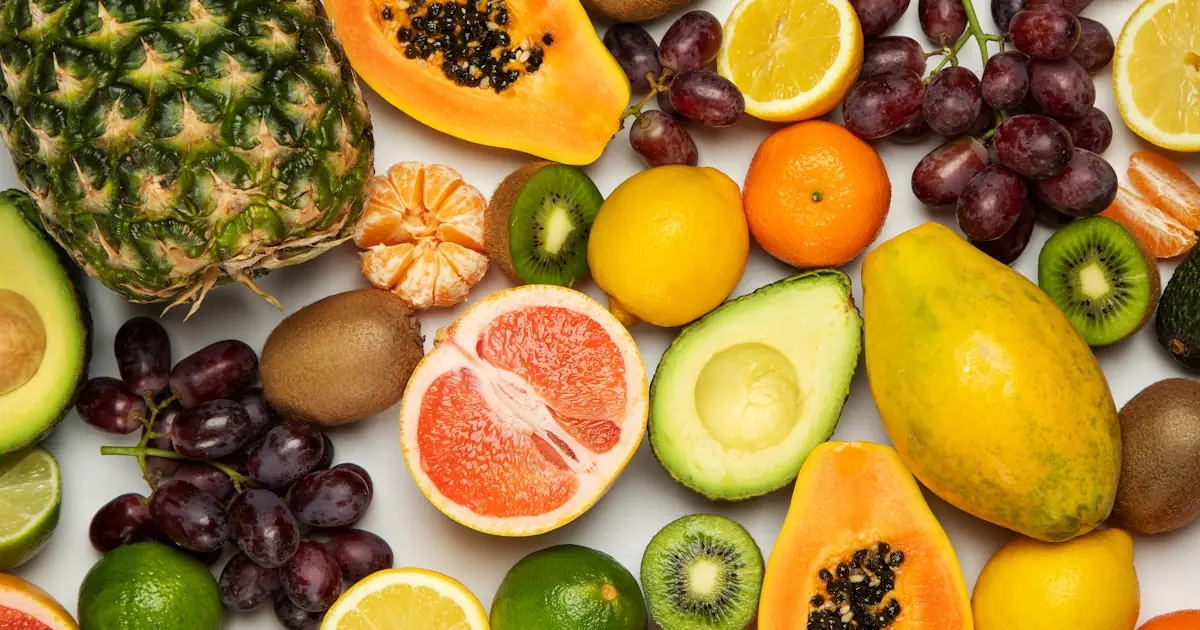
This guide compares the nutrition and health benefits of bananas, apples, avocados, oranges, mangoes, strawberries, blueberries, watermelon, pineapple, grapes, kiwi, pomegranate, dates, papaya and guava so you can understand what each fruit contributes to your diet.
Fruit Nutrition at a Glance
The values below are approximate amounts per 100 grams of fresh edible fruit. Exact nutrition can vary according to variety, ripeness and growing conditions.
| Fruit | Calories | Carbs | Sugar | Fiber |
|---|---|---|---|---|
| Banana | ~89 | ~23 g | ~12 g | ~2.6 g |
| Apple | ~52 | ~14 g | ~10 g | ~2.4 g |
| Avocado | ~160 | ~8.5 g | <1 g | ~6.7 g |
| Orange | ~47 | ~12 g | ~9 g | ~2.4 g |
| Mango | ~60 | ~15 g | ~14 g | ~1.6 g |
| Strawberries | ~32 | ~8 g | ~5 g | ~2 g |
| Blueberries | ~57 | ~15 g | ~10 g | ~2.4 g |
| Watermelon | ~30 | ~8 g | ~6 g | ~0.4 g |
| Pineapple | ~50 | ~13 g | ~10 g | ~1.4 g |
| Grapes | ~69 | ~18 g | ~15–16 g | ~0.9 g |
| Kiwi | ~60 | ~15 g | ~9 g | ~3 g |
| Pomegranate arils | ~83 | ~19 g | ~14 g | ~4 g |
| Dates | ~275–280 | ~75 g | ~66 g | ~7 g |
| Papaya | ~43 | ~11 g | ~8 g | ~1.7 g |
| Guava | ~68 | ~14 g | ~9 g | ~5.4 g |
Quick Answer
For lower-calorie fruit, strawberries, watermelon, oranges and papaya are excellent choices.
For higher fiber, avocado, guava, pomegranate, kiwi and dates stand out.
For a concentrated source of carbohydrates, bananas, grapes, mangoes and dates are particularly useful.
For healthy fats, avocado is in a category of its own.
Are Fruits Healthy Even Though They Contain Sugar?
For most people, yes.
The sugar naturally present in whole fruit comes packaged with water, fiber, vitamins, minerals and plant compounds.
That is different from consuming the same amount of sugar through sweets or sugar-sweetened drinks.
Whole fruit generally takes longer to eat and digest than fruit juice, and the fiber helps make it more filling.
This does not mean natural sugar has no calories or that portion size never matters.
A large serving of dates, for example, is much more calorie-dense than the same weight of watermelon.
But judging whole fruit solely by its sugar content ignores most of its nutritional value.
Banana Nutrition Facts and Health Benefits
Bananas are among the most popular fruits in the world.
They are naturally sweet, portable and particularly useful when you need an easy source of carbohydrates.
Approximately 100 grams of banana provides:
| Nutrient | Approximate Amount |
|---|---|
| Calories | 89 |
| Carbohydrates | 23 g |
| Sugar | 12 g |
| Fiber |
|
| Protein |
|
| Fat |
|
Bananas also provide potassium, vitamin B6, vitamin C and several other micronutrients.
How Many Calories Are in One Banana?
A medium banana typically contains approximately 100–110 calories.
Larger bananas naturally contain more.
Are Bananas High in Carbs?
Compared with berries and watermelon, bananas are relatively high in carbohydrates.
That can actually be useful.
A banana can make a convenient:
- pre-workout snack
- breakfast carbohydrate
- addition to oatmeal
- smoothie ingredient
- portable snack
Carbohydrates are the body's preferred fuel for many forms of moderate- to high-intensity exercise.
Are Bananas Good for Weight Loss?
They can be.
Bananas do not cause or prevent weight loss by themselves.
A medium banana provides roughly 100 calories along with fiber and nutrients. Whether it fits a weight-loss diet depends on your overall calorie intake.
Pairing a banana with Greek yogurt or a small portion of nuts can also create a more balanced snack containing protein or fat.
Apple Nutrition: Calories, Carbs and Benefits
Apples combine sweetness, water and fiber in a relatively low-calorie package.
Approximately 100 grams of fresh apple with skin provides:
| Nutrient | Approximate Amount |
|---|---|
| Calories | 52 |
| Carbohydrates | 14 g |
| Sugar | 10 g |
| Fiber |
|
| Protein |
|
| Fat |
|
A medium apple typically contains around 90–100 calories.
What Makes Apples Nutritious?
Apples provide vitamin C, potassium and several plant compounds.
Much of their fiber and many plant compounds are concentrated in or near the skin, so eating the peel can increase the nutritional value if you enjoy it.
Are Apples Good for Weight Management?
They can be useful because they provide a combination of water and fiber.
An apple also takes longer to eat than drinking apple juice, making whole fruit generally more filling.
Try pairing an apple with:
- peanut butter
- Greek yogurt
- cottage cheese
- nuts
if you want a more substantial snack.
Avocado Nutrition Facts and Health Benefits
Avocado is very different from most other fruits.
Instead of getting most of its calories from carbohydrates, avocado contains a large amount of unsaturated fat.
Approximately 100 grams provides:
| Nutrient | Approximate Amount |
|---|---|
| Calories | 160 |
| Carbohydrates |
|
| Sugar | <1 g |
| Fiber |
|
| Protein | 2 g |
| Fat | ~15 g |
Is Avocado High in Calories?
Yes, compared with most fruit.
But the reason is not sugar.
Avocado is calorie-dense because of its fat content.
Most of its fat is unsaturated.
It also provides substantial fiber, potassium, folate and other nutrients.
Is Avocado Good for Weight Loss?
It can be included in a weight-loss diet, but portion size matters more than it does with very low-calorie fruits.
Half an avocado can add meaningful calories to a meal.
That does not make it unhealthy.
It simply means avocado works best when its calories are accounted for rather than treated as unlimited because the fat is considered “healthy.”
Orange Nutrition Facts
Oranges are best known for vitamin C, but they also provide fiber, folate and potassium.
Approximately 100 grams of orange provides:
| Nutrient | Approximate Amount |
|---|---|
| Calories | 47 |
| Carbohydrates | 12 g |
| Sugar | 9 g |
| Fiber |
|
| Protein |
|
| Fat |
|
A typical medium orange provides roughly 60–70 calories.
Why Are Oranges Good Sources of Vitamin C?
Vitamin C supports normal collagen formation, immune function, antioxidant protection and iron absorption.
One orange can make a substantial contribution to daily vitamin C intake.
Whole Orange vs Orange Juice
Whole fruit is usually more filling because it retains its fiber.
Juice makes it much easier to consume the sugar and calories from several oranges quickly.
Orange juice can still fit into a diet, but whole oranges generally provide better satiety.
Mango Nutrition Facts and Benefits
Mango is naturally sweeter and more carbohydrate-rich than fruits such as strawberries.
Approximately 100 grams provides:
| Nutrient | Approximate Amount |
|---|---|
| Calories | 60 |
| Carbohydrates | 15 g |
| Sugar | ~14 g |
| Fiber |
|
| Protein |
|
| Fat |
|
Mango provides vitamin C, folate and carotenoids that the body can use to make vitamin A.
Is Mango Too High in Sugar?
Mango contains more natural sugar than many berries, but it is still a whole fruit.
For most people, there is no need to avoid mango simply because it tastes sweet.
Portion awareness may be more important for people closely monitoring carbohydrate intake.
Strawberry Nutrition Facts
Strawberries are among the lowest-calorie commonly eaten fruits.
Approximately 100 grams provides:
| Nutrient | Approximate Amount |
|---|---|
| Calories | 32 |
| Carbohydrates | 7–8 g |
| Sugar | ~5 g |
| Fiber | 2 g |
| Protein |
|
| Fat |
|
Strawberries are also particularly rich in vitamin C.
Are Strawberries Good for Weight Loss?
They can be very useful in calorie-controlled diets because they provide considerable volume for relatively few calories.
A large bowl of strawberries generally contains fewer calories than an equivalent portion of dried fruit or many snack foods.
Try adding them to Greek yogurt or cottage cheese for a higher-protein snack.
Blueberry Nutrition and Health Benefits
Blueberries are especially well known for their blue-purple plant pigments called anthocyanins.
Approximately 100 grams provides:
| Nutrient | Approximate Amount |
|---|---|
| Calories | 57 |
| Carbohydrates | 14–15 g |
| Sugar | ~10 g |
| Fiber |
|
| Protein |
|
| Fat |
|
Blueberries also contribute vitamin C, vitamin K, manganese and numerous plant compounds.
Fresh vs Frozen Blueberries
Both can be nutritious.
Frozen blueberries are often harvested when ripe and frozen soon after.
They can be particularly convenient for:
- oatmeal
- smoothies
- yogurt
- baking
Choose unsweetened frozen fruit if you want the nutritional profile of the fruit itself without added sugar.
Watermelon Nutrition Facts
Watermelon is mostly water, which explains its low calorie density.
Approximately 100 grams provides:
| Nutrient | Approximate Amount |
|---|---|
| Calories | 30 |
| Carbohydrates |
|
| Sugar | ~6 g |
| Fiber |
|
| Protein |
|
| Fat |
|
Is Watermelon Hydrating?
Yes.
Watermelon contains a very high percentage of water.
That makes it refreshing in warm weather and useful as part of overall fluid intake.
It also provides vitamin C and the red plant pigment lycopene.
Is Watermelon High in Sugar?
Per 100 grams, watermelon actually contains less sugar than bananas, grapes, mangoes and many other fruits.
Its sweetness can make it seem higher in sugar than it really is.
Pineapple Nutrition and Benefits
Pineapple combines natural sweetness with vitamin C and manganese.
Approximately 100 grams provides:
| Nutrient | Approximate Amount |
|---|---|
| Calories | 50 |
| Carbohydrates | 13 g |
| Sugar | ~10 g |
| Fiber |
|
| Protein |
|
| Fat |
|
Pineapple also contains bromelain, a group of protein-digesting enzymes.
However, pineapple should not be treated as a digestive cure or fat-burning food simply because bromelain is present.
Fresh vs Canned Pineapple
Both can fit into a healthy diet.
When buying canned pineapple, look at what it is packed in.
Pineapple canned in heavy syrup can contain considerably more added sugar than fruit packed in juice or water.
Grapes Nutrition Facts
Grapes provide natural carbohydrates along with vitamin K, copper and various polyphenols.
Approximately 100 grams provides:
| Nutrient | Approximate Amount |
|---|---|
| Calories | 69 |
| Carbohydrates | 18 g |
| Sugar | ~15–16 g |
| Fiber |
|
| Protein |
|
| Fat |
|
Are Grapes High in Sugar?
Grapes contain more sugar per 100 grams than strawberries or watermelon.
But again, they are still a whole fruit.
The main practical issue is portion size.
Grapes are very easy to eat quickly, so a large bowl can provide considerably more carbohydrates than expected.
Red vs Green Grapes
Both provide valuable nutrients.
Red and purple grapes generally contain higher concentrations of certain pigments and polyphenols in their skins.
There is no need to avoid green grapes, though. Variety is a reasonable approach.
Kiwi Nutrition and Benefits
Kiwi is small, but nutritionally it offers a lot.
Approximately 100 grams of green kiwi provides:
| Nutrient | Approximate Amount |
|---|---|
| Calories | ~60 |
| Carbohydrates | ~15 g |
| Sugar | ~9 g |
| Fiber | ~3 g |
| Protein | ~1 g |
| Fat | ~0.5 g |
Kiwi is especially rich in vitamin C and also provides vitamin K, potassium, folate and fiber.
Can You Eat Kiwi Skin?
Yes, the skin is edible.
Eating the skin increases fiber intake, although some people dislike its fuzzy texture.
Wash the fruit thoroughly before eating it with the skin.
Pomegranate Nutrition Facts
The edible red seeds of a pomegranate are called arils.
Approximately 100 grams provides:
| Nutrient | Approximate Amount |
|---|---|
| Calories | 83 |
| Carbohydrates | 19 g |
| Sugar | ~14 g |
| Fiber | 4 g |
| Protein |
|
| Fat |
|
Pomegranate also provides vitamin C, vitamin K, folate and a variety of polyphenols.
Pomegranate Juice vs Whole Pomegranate
Whole arils provide fiber.
Juice contains many of the fruit's compounds but generally provides less fiber and can be consumed much more quickly.
For everyday eating, whole pomegranate arils often provide better satiety.
Dates Nutrition: Calories, Sugar and Benefits
Dates stand out from the rest of this list because they are dried fruit.
Removing much of the water makes their calories and sugar much more concentrated.
Approximately 100 grams provides:
| Nutrient | Approximate Amount |
|---|---|
| Calories | ~275–280 |
| Carbohydrates | ~75 g |
| Sugar | ~66 g |
| Fiber | ~7 g |
| Protein | ~2 g |
| Fat | Very little |
Dates also contribute potassium, copper, magnesium and other nutrients.
Are Dates Healthy Despite Their Sugar?
Dates can absolutely fit into a balanced diet.
However, their serving size matters.
A few dates are very different from eating 100 grams.
Because dates are naturally concentrated in carbohydrates, they can be useful:
- before exercise
- in energy snacks
- as a sweetener in recipes
- paired with nuts or yogurt
They are nutritious, but they are not a low-calorie food.
Papaya Nutrition and Health Benefits
Papaya is a soft tropical fruit with relatively few calories.
Approximately 100 grams provides:
| Nutrient | Approximate Amount |
|---|---|
| Calories | 43 |
| Carbohydrates | 11 g |
| Sugar | ~8 g |
| Fiber |
|
| Protein |
|
| Fat |
|
Papaya is particularly rich in vitamin C and also provides folate and carotenoids.
It contains an enzyme called papain, which can break down proteins.
That does not mean eating papaya will solve every digestive problem, but it is one interesting part of the fruit's composition.
Guava Nutrition Facts and Benefits
Guava may be one of the most underrated fruits nutritionally.
Approximately 100 grams provides:
| Nutrient | Approximate Amount |
|---|---|
| Calories | 68 |
| Carbohydrates | 14 g |
| Sugar | ~9 g |
| Fiber |
|
| Protein |
|
| Fat | 1 g |
Guava stands out for two reasons:
fiber and vitamin C.
It can provide substantially more vitamin C per 100 grams than oranges.
It also has more protein than most fruits, although fruit in general should not be considered a major protein source.
Which Fruit Has the Most Protein?
Fruit is not typically a high-protein food.
Among the fruits covered here, guava and avocado provide somewhat more protein than most others.
However, even they contain far less protein than foods such as:
- Greek yogurt
- eggs
- chicken
- lentils
- beans
- tofu
If you want a high-protein snack, pair fruit with a protein food rather than relying on fruit alone.
Which Fruits Are Lowest in Calories?
Among these fruits, some of the lowest-calorie options per 100 grams include:
| Fruit | Approx. Calories |
|---|---|
| Watermelon | 30 |
| Strawberries | 32 |
| Papaya | 43 |
| Orange | 47 |
| Pineapple | 50 |
| Apple | 52 |
| Blueberries | 57 |
These foods can provide considerable volume and sweetness without a very high calorie intake.
Which Fruits Are Highest in Fiber?
Fiber amounts vary by serving size, but some particularly useful choices include:
- avocado
- guava
- pomegranate
- dates
- kiwi
- apples
- berries
Raspberries and pears, although not included in this specific list, are also notable high-fiber fruits.
Which Fruits Have the Most Sugar?
Per 100 grams, dates are far ahead because they are dried and contain very little water.
Among fresh fruits on this list, grapes and mangoes are among the sweeter options.
But sugar concentration alone is not enough to determine whether a fruit is healthy.
A more useful approach is to consider:
- serving size
- fiber
- total calories
- overall carbohydrate needs
- how the fruit fits into the rest of your diet
Best Fruits for Weight Management
There is no special fruit that melts body fat.
However, fruits with high water content and relatively few calories can be particularly convenient.
Examples include:
- strawberries
- watermelon
- oranges
- papaya
- apples
- kiwi
Higher-calorie fruits such as avocado and dates can also fit into a weight-loss diet, but portions become more important.
Best Fruits Before Exercise
For someone who wants an easily digested carbohydrate source before training, useful choices may include:
- banana
- grapes
- mango
- dates
These provide relatively accessible carbohydrates.
The ideal amount depends on how long you have before exercise and the intensity of your workout.
Best Fruits After Exercise
Almost any fruit can work after exercise.
Fruit provides carbohydrates, water and micronutrients.
But fruit alone generally provides very little protein.
For recovery, consider combinations such as:
banana + Greek yogurt
berries + cottage cheese
mango + yogurt
apple + milk
dates + a protein-rich meal
This gives you carbohydrates alongside protein.
Whole Fruit vs Fruit Juice
For most everyday situations, whole fruit has an advantage.
Whole fruit generally provides:
- more fiber
- more chewing
- greater fullness
- slower consumption
Juice removes much or all of the intact fiber and makes it easier to drink the equivalent of several fruits quickly.
That does not mean fruit juice can never be consumed.
It simply means a glass of juice should not automatically be considered nutritionally identical to eating whole fruit.
Fresh vs Frozen Fruit
Frozen fruit can be just as practical and nutritious as fresh fruit.
It is useful for:
- smoothies
- oatmeal
- yogurt
- desserts
- cooking
The key is choosing products without large amounts of added sugar when you want plain fruit.
Frozen berries in particular can be an affordable way to eat berries year-round.
Fresh vs Dried Fruit
Dried fruit is much more calorie-dense because most of the water has been removed.
For example, 100 grams of fresh grapes and 100 grams of raisins are not nutritionally equivalent in calorie density.
The dried version contains much more carbohydrate and calories in the same weight.
Dried fruit can still be nutritious, but smaller portions are appropriate.
Is Fruit Good for People Trying to Eat Less Sugar?
It depends on why you are reducing sugar.
For most people trying to improve general diet quality, there is usually no reason to eliminate whole fruit.
Whole fruit provides far more nutritional value than foods dominated by added sugars.
People who need to manage blood glucose more closely may benefit from considering:
- portion size
- total carbohydrates
- fruit type
- meal composition
Pairing fruit with protein or fat can also make a meal or snack more balanced.
How to Build a More Balanced Fruit Snack
Fruit contains mainly carbohydrates.
To make the snack more nutritionally complete, pair it with protein or healthy fat.
Examples include:
Apple + Peanut Butter
Adds protein and unsaturated fat.
Berries + Greek Yogurt
Adds substantial protein.
Banana + Cottage Cheese
Combines carbohydrate with complete protein.
Orange + Almonds
Adds fat, protein and magnesium.
Kiwi + Greek Yogurt
Provides vitamin C plus protein.
Dates + Nuts
Creates an energy-dense snack that can be useful around exercise.
Frequently Asked Questions
The Bottom Line
Fruit is not one single nutritional category.
Each type offers something different.
Bananas provide convenient carbohydrates and potassium.
Apples combine water and fiber in a relatively low-calorie food.
Avocados stand out for healthy unsaturated fats and fiber.
Oranges are excellent sources of vitamin C.
Mangoes provide natural carbohydrates, vitamin C and carotenoids.
Strawberries offer plenty of vitamin C for very few calories.
Blueberries provide fiber and anthocyanin plant pigments.
Watermelon is exceptionally hydrating and low in calorie density.
Pineapple supplies vitamin C, manganese and bromelain.
Grapes provide carbohydrates and polyphenols.
Kiwi combines vitamin C with a useful amount of fiber.
Pomegranate provides fiber and a variety of polyphenols.
Dates are nutrient-rich but calorie-dense because their sugar is concentrated through drying.
Papaya provides vitamin C, carotenoids and folate.
Guava stands out for its impressive vitamin C and fiber content.
Instead of trying to identify the one “best” fruit, aim for variety.
Different colors, textures and fruit types naturally provide different nutrients.
For most people, regularly eating whole fruit as part of an overall balanced diet is far more important than worrying about whether a banana has slightly more sugar than a strawberry.