Vegetable Nutrition Facts: Calories, Fiber, Carbs & Health Benefits
Secondary Keywords: spinach nutrition, broccoli nutrition, kale nutrition, carrot nutrition facts, sweet potato nutrition, potato nutrition, tomato nutrition, cucumber nutrition, onion benefits, garlic nutrition, bell pepper nutrition, cauliflower nutrition, cabbage nutrition, green peas nutrition, corn nutrition
Vegetable Nutrition Facts: Calories, Fiber, Carbs & Health Benefits
Vegetables do not all bring the same thing to your plate.
Spinach and kale pack a surprising amount of vitamins into very few calories. Broccoli and cauliflower give you fiber along with vitamin C and other plant compounds. Carrots and sweet potatoes stand out for beta-carotene. Tomatoes and bell peppers are rich in colorful antioxidants, while potatoes, peas, and corn provide more carbohydrates and energy than leafy vegetables.
That difference is a good thing.
A healthy diet does not need one “best vegetable.” It benefits from eating different vegetables with different colors, textures, nutrients, and uses.
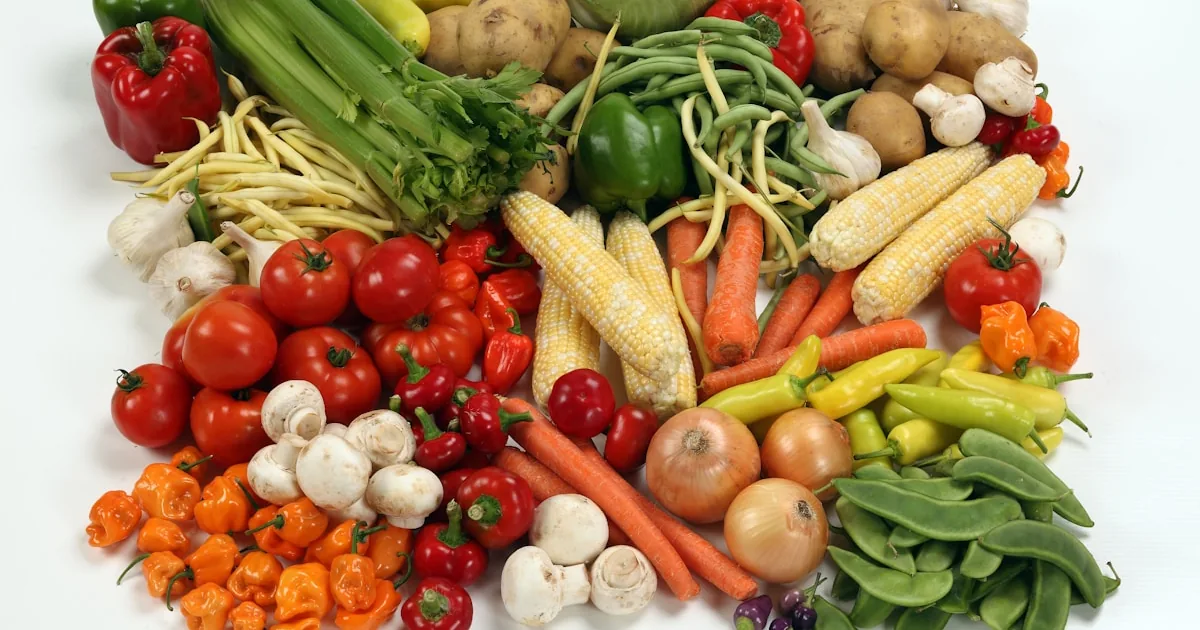
This guide looks at the nutrition and potential benefits of spinach, broccoli, kale, carrots, sweet potatoes, potatoes, tomatoes, cucumbers, onions, garlic, bell peppers, cauliflower, cabbage, green peas, and corn.
Vegetable Nutrition at a Glance
The values below are approximate amounts per 100 grams of the food. Exact nutrition varies by variety, growing conditions, whether the vegetable is raw or cooked, and preparation method.
| Vegetable | Calories | Carbs | Fiber | Protein |
|---|---|---|---|---|
| Spinach | ~23 | ~3.6 g | ~2.2 g | ~2.9 g |
| Broccoli | ~34 | ~6.6 g | ~2.6 g | ~2.8 g |
| Kale | ~35 | ~4–5 g | ~4 g | ~3 g |
| Carrots | ~41 | ~10 g | ~2.8 g | ~0.9 g |
| Sweet potato | ~86 | ~20 g | ~3 g | ~1.6 g |
| Potato | ~77 | ~17 g | ~2 g | ~2 g |
| Tomato | ~18 | ~3.9 g | ~1.2 g | ~0.9 g |
| Cucumber | ~15 | ~3.6 g | ~0.5 g | ~0.7 g |
| Onion | ~40 | ~9.3 g | ~1.7 g | ~1.1 g |
| Garlic | ~149 | ~33 g | ~2.1 g | ~6.4 g |
| Bell pepper | ~25–31 | ~6 g | ~2 g | ~1 g |
| Cauliflower | ~25 | ~5 g | ~2 g | ~1.9 g |
| Cabbage | ~25 | ~5.8 g | ~2.5 g | ~1.3 g |
| Green peas | ~80–85 | ~14 g | ~5 g | ~5 g |
| Corn | ~85–95 | ~19 g | ~2–3 g | ~3–3.5 g |
Quick Answer
If you want very low-calorie vegetables, spinach, cucumber, tomatoes, cauliflower, cabbage, and bell peppers are easy choices.
If you want more carbohydrates and energy, potatoes, sweet potatoes, peas, and corn provide more.
For fiber, leafy greens, broccoli, cabbage, peas, and sweet potatoes can all make useful contributions.
And for variety, the simplest rule may be the best one: eat several colors rather than relying on the same vegetable every day.
Why Are Vegetables Important?
Vegetables provide nutrients that can be difficult to get from a diet dominated by highly processed foods.
Depending on the vegetable, they can provide:
- dietary fiber
- vitamin C
- vitamin K
- folate
- potassium
- carotenoids
- magnesium
- antioxidants and other plant compounds
Most non-starchy vegetables also contain a lot of water and relatively few calories.
That makes them useful for increasing the volume and nutrient density of meals.
But vegetables should not be treated as medicine.
Eating broccoli does not guarantee protection from disease, and one salad cannot cancel out an otherwise poor diet.
The biggest benefit comes from regularly eating a variety of plant foods as part of an overall balanced pattern.
Spinach Nutrition Facts and Benefits
Spinach is one of the most nutrient-dense leafy vegetables.
Around 100 grams of raw spinach provides approximately:
| Nutrient | Approximate Amount |
|---|---|
| Calories | 23 |
| Carbohydrates |
|
| Fiber |
|
| Protein |
|
| Fat |
|
Spinach also provides substantial amounts of vitamin K, folate, vitamin A precursors, vitamin C, magnesium, and potassium.
Is Spinach High in Protein?
For a vegetable, spinach contains a respectable amount of protein by weight.
But there is an important catch: spinach is extremely light.
You would need a large volume of raw spinach to obtain a meaningful amount of protein.
So spinach should be viewed as a nutrient-rich vegetable, not as your main protein food.
Pair it with foods such as eggs, chicken, beans, lentils, tofu, or Greek yogurt if you want a higher-protein meal.
Raw vs Cooked Spinach
Cooking causes spinach to shrink dramatically.
That means a cup of cooked spinach contains much more spinach by weight than a cup of raw spinach.
Cooking can also make some nutrients easier to absorb while reducing certain heat-sensitive vitamins.
There is no need to choose only raw or only cooked.
Both can be useful.
Broccoli Nutrition and Health Benefits
Broccoli is a cruciferous vegetable and one of the easiest ways to add fiber and vitamin C to a meal.
Approximately 100 grams of raw broccoli provides:
- about 34 calories
- around 6–7 grams of carbohydrates
- roughly 2.5–3 grams of fiber
- almost 3 grams of protein
Broccoli also contributes folate, vitamin K, potassium, and several plant compounds.
What Makes Broccoli Special?
Broccoli contains compounds known as glucosinolates.
When broccoli is chopped or chewed, these compounds can be converted into other biologically active compounds.
That does not make broccoli a cure for any medical condition, but it is one reason cruciferous vegetables receive a lot of attention in nutrition research.
Is Broccoli Good for Weight Management?
It can be useful.
Broccoli provides a lot of food volume for relatively few calories.
A large portion can make a meal feel more substantial while adding fiber and micronutrients.
That is helpful for calorie control, although broccoli itself does not “burn fat.”
Kale Nutrition Facts
Kale is another nutrient-rich leafy green.
Approximately 100 grams of raw kale provides around:
- 30–35 calories
- 4–5 grams of carbohydrates
- about 4 grams of fiber
- roughly 3 grams of protein
Kale is particularly rich in vitamin K and carotenoids and also provides vitamin C, folate, and minerals.
Kale vs Spinach
Both are excellent choices.
Spinach is softer and easier to use raw or cooked into many dishes.
Kale has a firmer texture and often provides more fiber per typical serving.
Rather than choosing one as the winner, rotating both gives you greater variety.
Carrot Nutrition Facts
Carrots are best known for beta-carotene, the orange pigment the body can convert into vitamin A.
Approximately 100 grams provides:
| Nutrient | Approximate Amount |
|---|---|
| Calories | 41 |
| Carbohydrates | ~10 g |
| Sugar | ~4.7 g |
| Fiber | ~2.8 g |
| Protein | ~0.9 g |
Are Carrots High in Sugar?
Carrots taste sweet, but they are not particularly high in calories or sugar compared with many foods.
Their natural sugars come packaged with water, fiber, vitamins, and minerals.
There is generally no reason for healthy people to avoid carrots because they contain sugar.
Are Carrots Good for Eye Health?
Carrots provide beta-carotene, which the body can convert into vitamin A.
Vitamin A is important for normal vision.
However, eating huge quantities of carrots will not give someone “superhuman” eyesight.
Carrots simply help provide a nutrient needed for normal eye function.
Sweet Potato Nutrition and Benefits
Sweet potatoes are more carbohydrate-rich than leafy greens but remain nutrient-dense.
Approximately 100 grams provides:
- about 86 calories
- around 20 grams of carbohydrates
- about 3 grams of fiber
- around 1.5–2 grams of protein
Orange-fleshed sweet potatoes are especially rich in beta-carotene.
They also contribute potassium, vitamin C, and other nutrients.
Are Sweet Potatoes Good Carbs?
There is no universal category of “good” and “bad” carbohydrates, but sweet potatoes are a minimally processed carbohydrate source that also provides fiber and micronutrients.
They can work well alongside:
- chicken
- fish
- eggs
- beans
- lentils
- tofu
That combination can create a balanced meal containing protein, carbohydrates, fiber, and micronutrients.
Potato Nutrition Facts
Potatoes often get an unfair reputation because they are associated with fries and chips.
A plain potato is very different from deep-fried potatoes covered in salt and sauces.
Approximately 100 grams of plain potato provides:
- about 75–80 calories
- roughly 17 grams of carbohydrates
- around 2 grams of fiber
- about 2 grams of protein
Potatoes also provide potassium, vitamin C, and vitamin B6.
Are Potatoes Unhealthy?
No.
Plain potatoes can be part of a balanced diet.
The nutritional profile changes dramatically depending on preparation.
Baked potato
Mostly potato, with relatively little added fat.
French fries
Potato plus a substantial amount of cooking oil and often sodium.
Loaded potato
May include butter, cheese, sour cream, and processed meat.
The potato itself is not necessarily the problem.
Sweet Potato vs Regular Potato
Both can be nutritious.
Sweet potatoes generally provide much more beta-carotene, especially orange varieties.
Regular potatoes can provide substantial potassium and vitamin C.
Their calories are actually fairly similar.
Choose according to taste, meal, and dietary variety rather than assuming sweet potatoes are always dramatically healthier.
Tomato Nutrition and Health Benefits
Botanically, tomatoes are fruits, but nutritionally and culinarily they are usually treated as vegetables.
Approximately 100 grams of raw tomato provides:
| Nutrient | Approximate Amount |
|---|---|
| Calories | 18 |
| Carbohydrates |
|
| Fiber |
|
| Protein |
|
| Fat |
|
Tomatoes provide vitamin C, potassium, folate, and the red carotenoid lycopene.
Raw vs Cooked Tomatoes
Cooking tomatoes can increase the availability of lycopene.
A little dietary fat can also help with carotenoid absorption.
That means tomato sauce prepared with a modest amount of olive oil can still be nutritionally useful.
However, commercial tomato sauces may contain substantial sodium or added sugar, so labels are worth checking.
Cucumber Nutrition Facts
Cucumber is mostly water.
Approximately 100 grams provides only around:
- 15 calories
- 3–4 grams of carbohydrates
- less than 1 gram of fiber
- less than 1 gram of protein
Its biggest practical advantage is hydration and volume.
Is Cucumber Nutritious?
Yes, although it is not as concentrated in vitamins and minerals as leafy greens or peppers.
Cucumber contributes water, small amounts of vitamin K and other nutrients, and can make salads and meals larger without adding many calories.
It is a useful food, just not a nutritional powerhouse by itself.
Onion Nutrition and Benefits
Onions provide considerably more flavor than their calorie count suggests.
Approximately 100 grams provides:
- around 40 calories
- 9 grams of carbohydrates
- 1.5–2 grams of fiber
- about 1 gram of protein
Onions also contain vitamin C and sulfur-containing compounds as well as flavonoids such as quercetin.
Raw vs Cooked Onion
Raw onion has a stronger flavor and crunch.
Cooking softens its flavor and texture.
Some heat-sensitive compounds may decrease during cooking, but cooked onions remain nutritious.
The best form is simply the one that helps you enjoy vegetables more often.
Garlic Nutrition and Health Benefits
Garlic is more calorie-dense per 100 grams than many vegetables, but that comparison is misleading because people usually eat garlic in very small quantities.
One or two cloves contribute relatively few calories.
Garlic contains sulfur-containing compounds that form when it is chopped or crushed.
Is Garlic a Superfood?
Garlic can be part of a healthy diet, but it should not be treated as medicine or a replacement for medical treatment.
Its biggest practical advantage may simply be this:
Garlic makes healthy food taste better.
Adding garlic to vegetables, lentils, beans, chicken, fish, soups, and sauces can make nutritious meals much more enjoyable without relying on large amounts of sugar or heavy sauces.
Bell Pepper Nutrition Facts
Bell peppers are low in calories and particularly rich in vitamin C.
Around 100 grams of bell pepper provides roughly:
- 25–31 calories
- 6 grams of carbohydrates
- about 2 grams of fiber
- around 1 gram of protein
Red peppers tend to contain more carotenoids because they are more mature than green peppers.
Which Bell Pepper Is Healthiest?
There is no need to choose a single color.
Green, yellow, orange, and red peppers have slightly different nutrient profiles.
Eating several colors provides variety.
Red bell peppers are especially rich in vitamin C and carotenoids.
Cauliflower Nutrition Facts
Cauliflower is another cruciferous vegetable.
Approximately 100 grams provides:
| Nutrient | Approximate Amount |
|---|---|
| Calories | 25 |
| Carbohydrates | ~5 g |
| Fiber | ~2 g |
| Protein | ~2 g |
| Fat | ~0.3 g |
It also provides vitamin C, folate, vitamin K, and various plant compounds.
Is Cauliflower Rice Healthier Than Regular Rice?
It depends on what you need.
Cauliflower rice contains far fewer calories and carbohydrates than actual rice.
But rice provides much more carbohydrate and energy.
For someone who needs a lighter meal, cauliflower rice can be useful.
For an athlete or someone who needs more energy, normal rice may be more appropriate.
They are different foods rather than direct nutritional substitutes.
Cabbage Nutrition and Benefits
Cabbage is affordable, versatile, and easy to overlook.
Approximately 100 grams provides:
- around 25 calories
- about 6 grams of carbohydrates
- roughly 2.5 grams of fiber
- around 1.3 grams of protein
Cabbage provides vitamin C, vitamin K, folate, and plant compounds typical of cruciferous vegetables.
Red Cabbage vs Green Cabbage
Both are nutritious.
Red cabbage contains anthocyanin pigments that give it its purple-red color.
Green cabbage tends to have a milder appearance and flavor.
Using both is an easy way to increase color and variety in salads, stir-fries, soups, and slaws.
Green Peas Nutrition Facts
Peas are different from leafy and watery vegetables because they contain considerably more protein and carbohydrates.
Approximately 100 grams of cooked green peas provides:
| Nutrient | Approximate Amount |
|---|---|
| Calories | ~80–85 |
| Carbohydrates | ~14 g |
| Fiber | ~5 g |
| Protein | ~5 g |
| Fat | <1 g |
This makes peas one of the higher-protein vegetables commonly eaten at meals.
Are Peas High in Protein?
Compared with spinach or carrots, yes.
Compared with lentils, beans, tofu, eggs, or chicken, no.
Peas can contribute useful protein, but you would generally still want another major protein source in a high-protein meal.
Corn Nutrition Facts and Benefits
Corn is a starchy vegetable and cereal grain, depending on how it is harvested and used.
Sweet corn eaten as a vegetable provides roughly:
- 85–95 calories per 100 grams
- around 19 grams of carbohydrates
- 2–3 grams of fiber
- about 3–3.5 grams of protein
Corn also provides folate, thiamin, magnesium, and carotenoids such as lutein and zeaxanthin.
Is Corn Unhealthy Because It Is Starchy?
No.
Corn simply contains more carbohydrates than vegetables such as cucumber or spinach.
That does not make it unhealthy.
It can serve as a carbohydrate-containing side dish alongside protein and other vegetables.
What matters more is the whole meal.
Corn on the cob is nutritionally different from corn chips covered in salt and oil.
Non-Starchy vs Starchy Vegetables
Understanding this distinction can make meal planning easier.
Non-Starchy Vegetables
Examples include:
- spinach
- broccoli
- kale
- tomatoes
- cucumber
- onions
- bell peppers
- cauliflower
- cabbage
They generally contain fewer calories and carbohydrates per serving.
Starchy Vegetables
Examples include:
- potatoes
- sweet potatoes
- peas
- corn
These contain more carbohydrates and calories but also provide useful nutrients.
Starchy vegetables do not need to be avoided.
They simply contribute more to the carbohydrate portion of a meal.
Which Vegetables Are Lowest in Calories?
Among the vegetables covered here:
| Vegetable | Approx. Calories per 100 g |
|---|---|
| Cucumber | 15 |
| Tomato | 18 |
| Spinach | 23 |
| Cauliflower | 25 |
| Cabbage | 25 |
| Bell pepper | 25–31 |
| Broccoli | 34 |
These vegetables can help add volume to meals without adding many calories.
Which Vegetables Have the Most Protein?
Vegetables are generally not major protein foods, but some provide more than others.
Among this group:
Green peas stand out at around 5 grams per 100 grams.
Spinach, broccoli, kale, corn, and potatoes also contribute smaller amounts.
Still, if protein is your main goal, use vegetables alongside foods such as:
- lentils
- beans
- tofu
- tempeh
- eggs
- dairy
- fish
- chicken
- lean meat
Which Vegetables Have the Most Fiber?
Peas, kale, sweet potatoes, carrots, cabbage, and broccoli can all contribute meaningful amounts.
But serving size matters.
A vegetable that looks moderately high in fiber per 100 grams may provide little if you only eat a tablespoon of it.
The most reliable strategy is simply to eat vegetables in substantial portions throughout the day.
Best Vegetables for Weight Management
There is no vegetable that directly burns body fat.
However, high-volume, low-calorie vegetables can make it easier to build satisfying meals.
Good examples include:
- broccoli
- spinach
- cucumber
- tomatoes
- peppers
- cauliflower
- cabbage
Starchy vegetables such as potatoes can also fit well.
In fact, a plain boiled or baked potato can be surprisingly satisfying.
The calories often rise because of added oil, cheese, butter, cream, or frying rather than the potato itself.
Best Vegetables for a High-Protein Diet
A high-protein diet should still include plenty of vegetables.
Good options include:
- green peas
- spinach
- broccoli
- kale
- corn
But vegetables should complement your protein source rather than being expected to provide all of it.
A practical meal could be:
Chicken + broccoli + potatoes
or
Tofu + peas + peppers + brown rice
or
Lentils + spinach + tomatoes
Raw vs Cooked Vegetables: Which Is Healthier?
Neither is always better.
Cooking can reduce some heat-sensitive nutrients, such as vitamin C.
But it can also:
- soften fiber
- make vegetables easier to eat
- increase the availability of certain carotenoids
- allow you to eat a larger quantity
- improve flavor
Tomatoes are a good example: cooking can make lycopene more available.
Spinach also becomes dramatically more compact after cooking, making it easier to eat a larger amount.
A mixture of raw and cooked vegetables is a sensible approach.
Fresh vs Frozen Vegetables
Frozen vegetables can be highly nutritious.
They are often frozen relatively soon after harvest and can be convenient, affordable, and available year-round.
Frozen vegetables are useful for:
- stir-fries
- soups
- curries
- pasta
- rice dishes
- quick side dishes
Choose plain vegetables when you want control over sauces, salt, and added fat.
Fresh vs Canned Vegetables
Canned vegetables can also fit into a healthy diet.
They are inexpensive, convenient, and have a long shelf life.
The biggest concern is often sodium.
Draining and rinsing canned vegetables can help reduce some of the sodium.
Look for options labeled:
no salt added
or
low sodium
when appropriate.
Does Cooking Vegetables Destroy Their Nutrients?
Not completely.
Cooking changes nutrients rather than simply destroying all of them.
Boiling can cause some water-soluble vitamins to move into the cooking water.
Steaming, roasting, microwaving, sautéing, and quick stir-frying can retain substantial nutritional value.
If you boil vegetables in soup, you may consume some nutrients that have moved into the broth anyway.
The biggest nutritional mistake is usually not cooking vegetables.
It is not eating them at all because you dislike the way they are prepared.
Best Ways to Cook Vegetables
There is no single healthiest method, but several work well.
Steaming
Useful for broccoli, cauliflower, carrots, peas, and cabbage.
Roasting
Excellent for:
- broccoli
- cauliflower
- carrots
- potatoes
- sweet potatoes
- peppers
- onions
A measured amount of oil adds flavor without making the dish excessively calorie-dense.
Stir-Frying
A quick cooking method that works well with:
- broccoli
- peppers
- onions
- cabbage
- peas
Use a moderate amount of oil.
Grilling
Works particularly well for:
- peppers
- onions
- tomatoes
- corn
- potatoes
Raw
Some vegetables are especially easy to eat raw:
- cucumber
- carrots
- peppers
- tomatoes
- cabbage
- spinach
How to Make Vegetables Taste Better
Nutrition advice is not useful if the food tastes so bland that you never eat it.
Try flavoring vegetables with:
- garlic
- black pepper
- paprika
- chili
- cumin
- lemon
- lime
- vinegar
- fresh herbs
- mustard
- yogurt-based sauces
- a measured amount of olive oil
A small amount of fat can also help with the absorption of fat-soluble carotenoids found in vegetables.
Do Vegetables Have Carbohydrates?
Yes.
Almost all vegetables contain some carbohydrates.
However, the amount varies enormously.
Cucumber, tomatoes, spinach, and cauliflower are very low in carbohydrates.
Potatoes, sweet potatoes, corn, and peas contain much more.
This is why saying “vegetables are low-carb” is only partly true.
Do Vegetables Contain Sugar?
Many vegetables naturally contain small amounts of sugar.
Carrots, onions, tomatoes, peppers, and corn are examples.
Natural sugar in a whole vegetable comes alongside water, fiber, vitamins, minerals, and other nutrients.
For most healthy people, there is no need to fear vegetables because they contain a few grams of natural sugar.
How Much Vegetables Should You Eat?
There is no single perfect amount that works for everyone, but a useful practical goal is to make vegetables a regular part of meals and eat different types throughout the week.
Instead of focusing only on grams, try asking:
Does my plate have a meaningful amount of vegetables?
A simple meal-building approach is to include:
Protein + vegetables + a carbohydrate source + healthy fat
For example:
grilled chicken + broccoli + potato + olive oil dressing
or:
tofu + peppers + cabbage + brown rice + sesame seeds
Frequently Asked Questions
The Bottom Line
Vegetables are not nutritionally interchangeable, and that is exactly why eating a variety matters.
Spinach offers folate, vitamin K, carotenoids, and magnesium for very few calories.
Broccoli provides fiber, vitamin C, vitamin K, and characteristic cruciferous plant compounds.
Kale combines fiber with a particularly high concentration of vitamin K and carotenoids.
Carrots stand out for beta-carotene.
Sweet potatoes provide carbohydrates, fiber, potassium, and large amounts of beta-carotene in orange varieties.
Potatoes are a useful source of carbohydrate, potassium, and vitamin C when prepared without excessive added fat.
Tomatoes provide lycopene, vitamin C, and potassium.
Cucumbers are exceptionally low in calories and contain a large amount of water.
Onions and garlic add flavor while contributing distinctive plant compounds.
Bell peppers are excellent sources of vitamin C.
Cauliflower and cabbage provide fiber and belong to the nutrient-rich cruciferous vegetable family.
Green peas contain considerably more protein and fiber than many vegetables.
Corn is a starchy vegetable that provides carbohydrates, fiber, and carotenoids.
There is no need to choose only leafy greens or avoid potatoes because one category contains fewer calories than another.
Leafy and non-starchy vegetables are excellent for volume and micronutrients, while starchy vegetables can provide useful carbohydrates and energy.
The most practical strategy is simple:
eat vegetables regularly, vary the colors you choose, prepare them in ways you actually enjoy, and combine them with adequate protein, fiber-rich carbohydrates, and healthy fats.